Most Read
- SEC Short Sale Rule Could Create a Bubble in Financial Stocks
- Wall Street Outsourcing to New, Exotic Corners of the Globe
- Analytics Help Firms Turn Data Into Opportunity
- Cisco Global Exchange Study Ranks Latency Among Top Success Factors in Competitive Race
- DTCC, Markit to Create Single Point of Derivatives Confirmation
- BlackRock To Acquire Analytics Software Company
- NYC Financial Firms to Get New Disaster Recovery Data Center in Pennsylvania
- Deutsche, Merrill Reveal Recession-Proofing IT Strategies
Can the Market's Systems Keep Up With Electronic Trading?
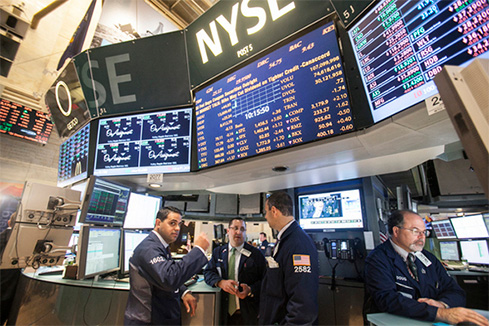
Yesterday’s steep stock market plunge of 416 points sent a warning of how vulnerable the market structure is to systems glitches and data backlogs when there are unexpected volume surges and rapid sell-offs in an electronic trading environment.
As most of us know, problems began around 2 p.m. when the Dow Jones Industrial Average was already down 200 points –- in part a reaction to the sell-off in Chinese stocks, translated into concerns about the U.S. economy. I was in the car at 2:30 p.m. whenCBS Radio reported that the market was crashing and the Dow was down 250 points.
The heavy sell-off in U.S. stocks caused a 70-minute lag in correctly calculating the value of the Dow Jones Industrial Average, according to Dow Jones Indexes, which issued a statement today.
In the release, Michael Petronella, president of Dow Jones Indexes, said the problem arose in the system responsible for feeding market data into the calculation system.
Recognizing the problem, Dow Jones Indexes switched to a back-up market data system for calculating the index, which immediately caused the index to drop by another 200 points at around 3 p.m. -– so the market was down over 500 points.
The switch over to the back-up systems caused all the prices to be processed at once, and this led to the downward spike in the reported index value, according to the release. When the Dow Jones index was adjusted to the true value and the market plummeted 200 points, this probably triggered algorithmic trading programs to generate buy and sell orders, which were concentrated in the Dow 30 stocks, rather than dispersed throughout the market, the source conjectures.
As reported in today’s Wall Street Journal, the heavy volume reportedly overwhelmed the systems in the last hour of trading at the New York Stock Exchange, which recently switched over to the hybrid trading system. While a spokesman for the NYSE in the WSJ article said the hybrid trading system, which executes orders electronically and sends some orders to the floor, worked fine, the problem was with another system that feeds it that couldn’t handle the overload of orders. (According to a source, an order routing mechanism within the NYSE's DOT sytem was the problem.) Some orders were not executed and others were sent to alternative execution venues — including NYSE Arca.
One brokerage source called me to say that brokers were experiencing delays in their network's routing orders to the NYSE and not receiving execution reports on time. There were also problems using Nasdaq to route orders to the NYSE or to alternative trading systems.
The broker is concerned over the systems snafus and what this means for the future given that Regulation NMS takes effect next Monday, March 5th. “In a day like today, after years of investing in technology and planning for two years, what’s going to happen when Reg NMS is implemented?” asks the brokerage executive, whose firm provides algorithmic trading strategies to institutions. “I don’t understand why we experienced the problems,” he vented after the market close yesterday.
An article in the Financial Times also attributed the market decline to hedge funds and high-leveraged strategies. "Once the market turns they have to get out fast,” said a trader quoted in the FT article.
If there is a capacity problem, this raises red flags since Reg NMS starts on Monday and all the new electronic trading systems go live. No one knows how these systems will interact with each other. The question is: Should we be worried? The industry is adopting more-aggressive electronic trading strategies and relying on a handful of vendors for their order routing. Should these vendors be regulated? What were your firm’s experiences yesterday? Please write in.
Posted by Ivy Schmerken at 03:41 PM
This is a public forum. CMP Media and its affiliates are not responsible for and do not control what is posted herein. CMP Media makes no warranties or guarantees concerning any advice dispensed by its staff members or readers.
Community standards in this comment area do not permit hate language, excessive profanity, or other patently offensive language. Please be aware that all information posted to this comment area becomes the property of CMP Media LLC and may be edited and republished in print or electronic format as outlined in CMP Media's Terms of Service.
Important Note: This comment area is NOT intended for commercial messages or solicitations of business.
Greg MacSweeny Columns
Greg MacSweeneyIn a Matter of Months, CIOs’ Agendas Turned Upside Down
Early in the summer of 2007, Wall Street was counting its good fortune. In early summer 20...
Former CIO Gavazzi Launches Risk Alert Provider
Where Are They Now? Life After Wall Street
Where Are They Now? Mitchel Lenson, Former Deutsche Bank Group CIO
Larry Tabb Columns
Larry TabbClearing and Settlement Top-of-Mind for Front-Office Execs
In addition to the excitement in the U.S., the real focus is occurring in Europe, where th...
Risk Management IT Comes to the Forefront in the Wake of Subprime Credit Crisis
In a Tumultuous Economy, Wall Street Must -- and Will -- Find a New Model
CHECK THIS OUTNovell Real Time Linux Webcast SeriesIn order to succeed, companies must be able to respond quickly, deliver superior value and quality of service, and carefully manage their costs. In this series of brief webcasts, you will learn how SUSE Linux Enterprise Real Time from Novell enables organizations to respond quicker by delivering low latencies, deliver increased value with fast response times, and better manage costs. |
EventsLive Events:Accelerating Wall Street 2 October 02, 2008 Buy-Side Trading Summit 2008 November 16-18, 2008 |
White PapersLevel 3 Connectivity KitStay ahead of the bandwidth curve. The Level 3 Connectivity Kit provides full resources to help you make informed decisions regarding your network infrastructure. Download the Data Center Networking Strategies for Financial Services Firms White Paper; Business Class Ethernet: Trends in Perspective eBook and BC/DR Best Practices for the Data-Intensive Enterprise Gartner Webcast Surviving and Thriving in a Challenging Market Learn how financial services firms can use customer-centric strategies and tools to maximize client value and loyalty, gain insight into new opportunities, and do more with less, counteracting market volatility. |
Marketplace |
Career CenterReady to take that job and shove it?
|
Most Recent Job Posts:
* Lowe's seeking Manager of IT Research in Mooresville, NC
* Hebrew Senior Life seeking Senior Informatics Analyst in Roslindale, MA * UCLA seeking Programmer/Analyst IV in Los Angeles, CA * T-Mobile seeking Program Manager 3 in Snoqualmie, WA * Comcast seeking Tier 4 CRAN Network Engineer in Chelmsford, MA For more tech jobs in the industry, visit Wall Street & Technology's Career Portal. |